
Master Search Engine Marketing: A Complete Guide
The Quick Answer

Search Engine Marketing (SEM) is a powerful digital strategy aimed at increasing a website's visibility in search engine results pages (SERPs). It involves both paid advertising and organic strategies, making it a comprehensive approach to online marketing. The core of SEM is to leverage search engines to drive targeted traffic to your site, enhancing both visibility and conversions.
Key Components of SEM
To master SEM, you need to focus on several key components:
- Keyword Research: Identifying the right keywords is crucial. These are the terms your potential customers use to find products or services like yours.
- Pay-Per-Click (PPC) Advertising: This involves bidding on keywords to display ads in SERPs. It's a cost-effective way to get immediate traffic.
- Search Engine Optimization (SEO): While SEM includes paid strategies, SEO focuses on optimizing content and site structure to improve organic rankings.
- Ad Copy and Landing Pages: Crafting compelling ad copy and designing optimized landing pages are essential to converting clicks into customers.
Benefits of SEM
The advantages of implementing SEM are numerous:
- Increased Visibility: By appearing in search results, your business gains more exposure to potential customers.
- Targeted Reach: SEM allows you to target specific demographics, ensuring your ads reach the right audience.
- Measurable Results: With tools like Google Ads, you can track the performance of your campaigns and adjust strategies as needed.
| Strategy | Focus Area | Benefit |
|---|---|---|
| Keyword Research | SEO and PPC | Target right audience |
| PPC Advertising | Paid Traffic | Immediate visibility |
| SEO | Organic Traffic | Long-term ranking |
By integrating Search Engine Marketing into your digital strategy, you can enhance visibility, attract more visitors, and ultimately drive growth for your business.
Background & Context
Search Engine Marketing (SEM) has become an integral part of digital marketing strategies, particularly for those who aim to enhance their online presence. Understanding its origins and evolution is crucial for anyone venturing into the world of digital marketing. SEM encompasses both Search Engine Optimization (SEO) and Pay-Per-Click (PPC) advertising, providing a dual approach to increase visibility on search engines like Google and Bing.
The Evolution of Search Engine Marketing
SEM's journey began in the late 1990s when search engines emerged as fundamental tools for navigating the internet. Initially, SEO was the primary focus, emphasizing the optimization of website content to improve organic search results. As the internet landscape matured, the need for more immediate results led to the development of PPC advertising. This shift allowed businesses to bid for ad placement in search engine results, ensuring instant visibility when users searched for specific keywords.
The integration of AI and machine learning has further transformed SEM. These technologies enable more precise targeting and personalization, allowing marketers to fine-tune their strategies to better meet consumer needs. By analyzing vast amounts of data, AI-driven SEM can predict trends and optimize campaigns in real-time, making it a powerful tool for businesses of all sizes.
Key Components of SEM
To fully grasp SEM, it's essential to understand its core components:
- Keyword Research: Identifying the right keywords is pivotal. This involves finding terms that potential customers use to search for products or services.
- Ad Creation: Crafting compelling ads that resonate with your target audience is crucial. This includes writing engaging headlines and descriptions that encourage clicks.
- Bidding Strategies: Effective bidding ensures your ads are displayed at optimal times and positions. It requires balancing cost with visibility.
- Performance Analysis: Continuous monitoring and adjustment of campaigns based on performance metrics like click-through rates (CTR) and conversion rates.
| SEM Component | Description | Importance |
|---|---|---|
| Keyword Research | Identifying search terms | Drives targeted traffic |
| Ad Creation | Developing engaging ads | Increases click-through rates |
| Bidding Strategies | Optimizing ad placement costs | Balances budget and visibility |
| Performance Analysis | Monitoring and adjusting campaigns | Ensures effective strategy |
The Role of SEM in Modern Marketing
In today's digital age, SEM is indispensable for businesses aiming to increase brand awareness and drive traffic to their websites. It allows marketers to reach specific audiences through targeted ads and achieve measurable outcomes. Unlike traditional advertising, SEM offers the flexibility to adjust campaigns on-the-fly, ensuring marketing efforts remain aligned with business goals.
By leveraging SEM, businesses can maximize their online presence and gain a competitive edge. As digital landscapes continue to evolve, staying informed about SEM trends and strategies will be crucial for sustained success.
Core Concepts

Understanding the core concepts of search engine marketing (SEM) is essential for anyone looking to harness its power effectively. This section will delve into three key concepts that form the backbone of SEM strategies, providing insights and practical applications to enhance your marketing efforts.
Key Concept 1: Keyword Research
Keyword research is the foundation of any successful SEM campaign. It involves identifying the words and phrases potential customers use when searching online. This process is critical for defining which terms will drive the most valuable traffic to your website.
Why Keyword Research Matters
- Targeted Traffic: By focusing on the right keywords, you can attract visitors who are more likely to convert.
- Cost Efficiency: Knowing which keywords are cost-effective helps in optimizing budgets.
- Competitive Advantage: Understanding what your competitors are targeting can help you find gaps in the market.
Steps to Effective Keyword Research
- Brainstorm Seed Keywords: Start with broad terms related to your business.
- Utilize Tools: Use tools like Google Keyword Planner to expand and refine your list.
- Analyze Competitors: Look at the keywords your competitors rank for to uncover opportunities.
- Prioritize: Choose keywords based on search volume, relevance, and competition.
Common Pitfalls
- Overlooking long-tail keywords, which often have less competition and higher conversion rates.
- Focusing only on high-volume keywords without considering user intent.
By investing time in thorough keyword research, you lay a strong foundation for your SEM strategy, ensuring your efforts are both targeted and efficient.
Key Concept 2: Ad Copy and Design
Once you have your keywords, the next step is crafting compelling ad copy and design. This aspect of SEM is about capturing attention and persuading users to click.
Elements of Effective Ad Copy
- Relevance: Ensure that your ad copy aligns with the keywords and user intent.
- Clarity: Use clear, concise language that communicates your offer quickly.
- Call to Action (CTA): Include a strong CTA that tells users exactly what to do next.
Ad Design Tips
- Visual Appeal: Use images or graphics that complement your message.
- Consistency: Maintain a consistent look and feel with your brand identity.
- A/B Testing: Regularly test different versions of your ads to see which performs best.
Ad Copy Mistakes to Avoid
- Using jargon or overly complex language that confuses potential customers.
- Failing to highlight unique selling propositions (USPs) that differentiate your product or service.
Creating effective ad copy and design is crucial for maximizing click-through rates and ensuring your SEM campaigns are successful.
Key Concept 3: Performance Tracking and Optimization
Tracking performance and optimizing your SEM campaigns is where you can truly make a difference in your marketing outcomes. This ongoing process involves analyzing data and making informed adjustments to improve results.
Key Metrics to Monitor
- Click-Through Rate (CTR): Measures the effectiveness of your ad in driving traffic.
- Conversion Rate: Indicates how well your landing pages are converting visitors into customers.
- Cost Per Click (CPC): Helps in understanding the financial efficiency of your campaigns.
Optimization Strategies
- Bid Adjustments: Modify bids based on performance to maximize ROI.
- Keyword Refinement: Regularly update your keyword list based on performance data.
- Ad Scheduling: Determine the best times to display your ads for maximum impact.
Tools for Performance Tracking
| Tool Name | Functionality | Benefit |
|---|---|---|
| Google Analytics | Tracks user behavior | Provides insights into user actions |
| SEMrush | Competitor analysis | Identifies market opportunities |
| Google Ads Manager | Campaign management | Offers detailed performance metrics |
Common Optimization Challenges
- Balancing between budget constraints and achieving desired reach.
- Keeping up with changes in search engine algorithms and market trends.
By focusing on performance tracking and optimization, you can ensure your SEM efforts are not only effective but also adaptable to changes in the market and user behavior.
"SEM is not just about driving traffic—it's about driving the right traffic." - Marketing Expert
In summary, mastering these core concepts of SEM—keyword research, ad copy and design, and performance tracking and optimization—will empower you to create campaigns that are both effective and efficient. By applying these principles, you can enhance your brand's visibility and achieve your marketing goals with precision.
How It Works

The Process Explained
Search Engine Marketing (SEM) is a powerful tool for increasing visibility and driving targeted traffic to your website. It involves a combination of paid advertising strategies and search engine optimization (SEO) techniques to enhance your online presence. Let's break down how the process works:
-
Keyword Research: The foundation of SEM is identifying the right keywords. This involves analyzing search trends, user intent, and competition to select keywords that will drive the most traffic. Tools like Google's Keyword Planner and SEMrush are invaluable for this step.
-
Ad Creation: Crafting compelling ad copy is crucial. Ads need to be engaging, relevant, and aligned with the searcher's intent. This involves writing headlines and descriptions that capture attention and encourage clicks.
-
Campaign Setup: Once your ads are ready, the next step is setting up a campaign using platforms like Google Ads. This involves defining your budget, targeting options, and ad placements. Targeting ensures your ads reach the right audience—those most likely to convert.
-
Bid Management: SEM operates on a bidding system where you compete for ad placement. Efficient bid management is essential to maximize ROI. Tools like Google Ads Manager can help automate and optimize this process.
-
Performance Tracking: Monitoring your campaign's performance is key to successful SEM. Utilize analytics tools to track metrics like click-through rates (CTR), conversion rates, and return on ad spend (ROAS). This data helps you refine your strategy and improve results over time.
Here's a quick overview in table form:
| Step | Description | Tools/Platforms Used |
|---|---|---|
| Keyword Research | Identify high-value search terms | Keyword Planner, SEMrush |
| Ad Creation | Write engaging ad copy | Google Ads |
| Campaign Setup | Define budget and targeting | Google Ads Manager |
| Bid Management | Optimize bids for placements | Automated bidding tools |
| Performance Tracking | Analyze and refine strategies | Google Analytics, SEMrush |
Understanding these steps is crucial for digital marketers and small business owners aiming to leverage SEM. By mastering each component, you can create campaigns that not only attract traffic but also convert visitors into customers.
Behind the Scenes
While the front-end of SEM focuses on ad creation and management, the behind-the-scenes aspects are equally important. Let's explore the unseen elements that contribute to a successful SEM strategy:
Algorithm Insights
Search engines like Google use complex algorithms to determine ad placements. These algorithms consider factors such as:
- Quality Score: A measure of the quality and relevance of your ads and landing pages. Higher scores can lead to better ad positions and lower costs.
- Ad Rank: Combines your bid amount and Quality Score to decide your ad position. Improving your Quality Score can boost your Ad Rank without increasing your budget.
"Understanding how search engine algorithms work is vital for optimizing your SEM strategy." - SEM Specialist
Continuous Optimization
SEM is not a set-it-and-forget-it process. It's an ongoing cycle of testing and tweaking. Here are key areas for continuous improvement:
- A/B Testing: Experiment with different ad copies, headlines, and visuals to see what resonates best with your audience.
- Re-targeting: Use data to re-engage users who have interacted with your ads but haven't converted yet.
- Budget Adjustments: Regularly review and adjust your budget based on performance data to ensure cost-effectiveness.
SEM is a dynamic field that requires constant learning and adaptation. By staying informed about algorithm changes and market trends, you can maintain a competitive edge.
To sum up, mastering SEM involves understanding both the visible and invisible components of the process. By focusing on both, you can create more effective campaigns and achieve your marketing goals with precision.
Real-World Applications

Use Case Examples
Understanding search engine marketing (SEM) is one thing, but seeing it in action is what truly solidifies its value. Let's delve into some practical examples where SEM strategies have significantly impacted businesses:
-
E-commerce Platforms: Online retailers often rely heavily on SEM to drive traffic to their websites. By utilizing targeted keywords and compelling ad copy, these platforms can attract potential buyers who are actively searching for products. For instance, an online shoe store might bid on terms like "buy running shoes" to reach customers ready to make a purchase.
-
Local Businesses: For small businesses, especially those with a physical presence, SEM can be a game-changer. A local bakery can use geographic targeting in its SEM campaigns to ensure its ads appear only to users within a certain radius, maximizing the impact of every dollar spent.
-
Content Creators and Bloggers: SEM isn't just for selling products; it's also about promoting content. Bloggers and content creators can use SEM to increase visibility for their posts. For example, a travel blogger might promote articles about "best destinations in Europe" to capture a broader audience.
Bold keywords and strategic ad placement are crucial for these applications, allowing businesses to reach their target audience effectively.
Digital Marketing Agencies
Digital marketers are masters at harnessing the power of SEM for their clients. Agencies often manage multiple campaigns across various industries, requiring a keen understanding of different markets. Here’s how they do it:
- Keyword Research: Agencies conduct thorough keyword research to identify terms that potential customers are searching for. This ensures that client ads appear in relevant searches, increasing the likelihood of conversion.
- Ad Optimization: Continuous A/B testing and performance analysis allow agencies to refine ad copy and visuals, ensuring the highest return on investment (ROI) for their clients.
- Performance Monitoring: By keeping a close eye on analytics, agencies can make informed decisions about budget adjustments and campaign tweaks.
These strategies highlight the importance of precision in SEM, as even minor adjustments can lead to significant improvements in campaign performance.
Small Business Success Stories
Small businesses often face the challenge of competing with larger companies with bigger budgets. SEM levels the playing field by allowing them to compete in their niche markets:
-
Case Study: Local Gym: A small gym used SEM to target keywords like "affordable gym membership" and "personal training near me." By focusing on these niche terms, they were able to attract local customers looking for specific services, leading to a 30% increase in memberships.
-
Case Study: Niche Retailer: A boutique clothing store specializing in eco-friendly fashion used SEM to promote their unique selling proposition. Ads emphasizing "sustainable clothing" and "eco-friendly fashion" attracted environmentally-conscious consumers, boosting sales by 25%.
These examples demonstrate how SEM can be tailored to fit the unique needs of any business, regardless of size or industry.
| Use Case | Strategy | Outcome |
|---|---|---|
| E-commerce | Targeted keywords | Increased sales |
| Local Business | Geographic targeting | Enhanced local presence |
| Content Creators | Promoting content | Broader audience reach |
| Small Businesses | Niche keyword focus | Competitive advantage |
In conclusion, search engine marketing offers a versatile toolkit for businesses aiming to enhance their online presence. Whether you're a digital marketer, a small business owner, or a content creator, SEM provides the tools you need to connect with your audience and achieve your marketing goals. By understanding these real-world applications, you can better appreciate the transformative power of SEM and how it can be leveraged to drive success.
Common Misconceptions
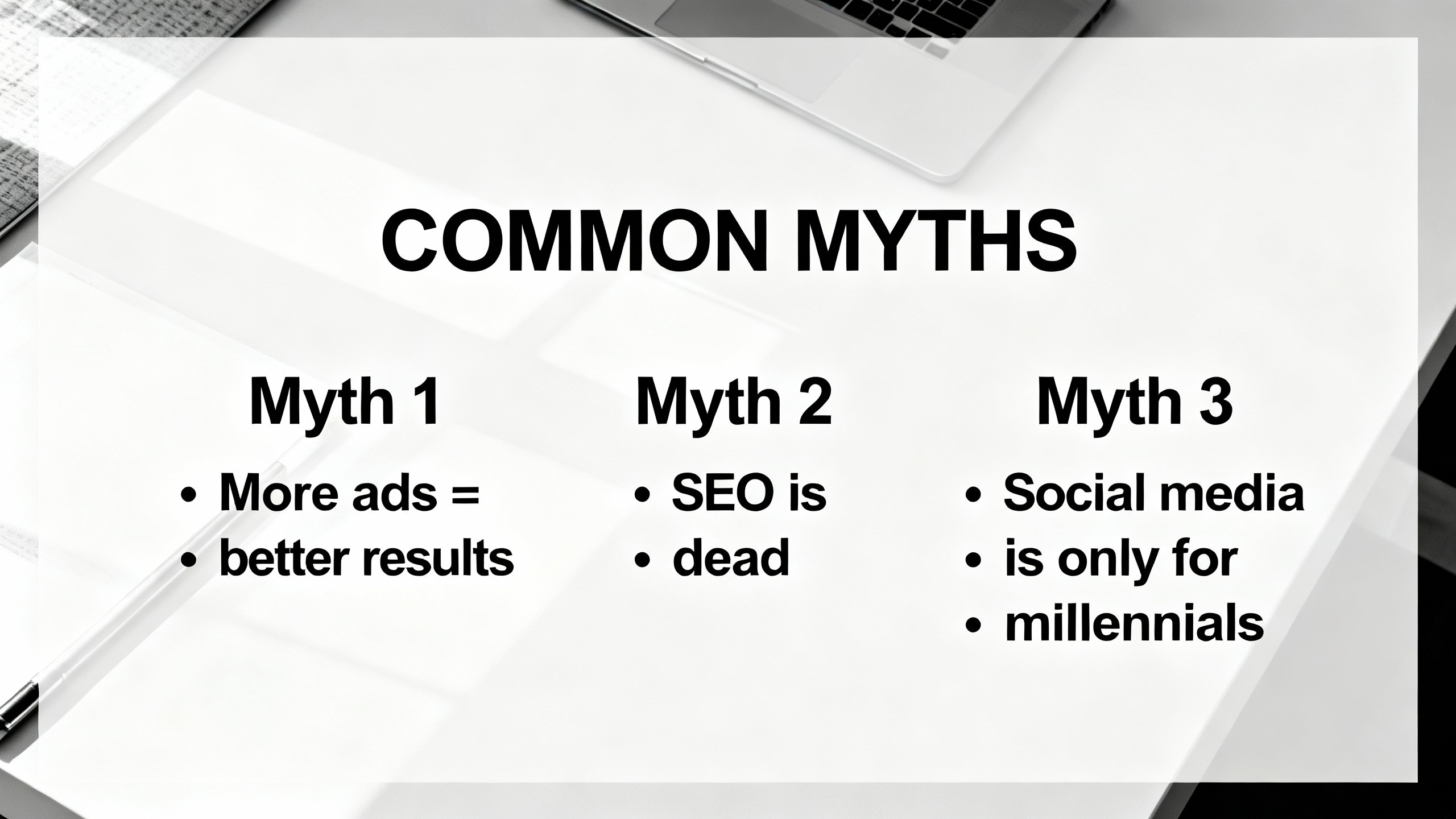
When it comes to search engine marketing (SEM), misunderstandings can often lead to missed opportunities. Many businesses overlook SEM's potential due to these misconceptions, which can be detrimental to their online growth. Let's clear the air and debunk some of the most common myths surrounding SEM.
One prevalent misconception is that SEM and SEO are the same. While they both aim to improve a website's visibility, they achieve this through different methods. SEO focuses on optimizing your site for organic search results, whereas SEM involves paid strategies to increase visibility. Understanding this distinction is crucial for effectively leveraging both approaches.
Another myth is that SEM is only for large businesses with substantial budgets. In reality, SEM can be tailored to fit various budgets, making it accessible even to small businesses. By strategically targeting specific keywords and demographics, small businesses can maximize their return on investment without breaking the bank.
"SEM is not just for big players; it's about playing smart, not just playing big."
Furthermore, some believe that SEM guarantees instant success. While SEM can indeed deliver quick results, it requires continuous monitoring and optimization. Ad campaigns need regular adjustments to remain effective, and analyzing performance metrics is essential to refine strategies over time.
To further illustrate, consider the following table, which outlines common misconceptions and the truths behind them:
| Misconception | Truth |
|---|---|
| SEM and SEO are the same | SEM involves paid strategies; SEO is organic |
| SEM is only for large businesses | SEM can be scaled to fit any budget |
| SEM guarantees instant success | Requires ongoing optimization and analysis |
Additionally, it's a mistake to think SEM is a "set it and forget it" strategy. Successful SEM campaigns require constant attention and adaptation to changing trends and consumer behavior. This dynamic nature means that marketers must stay informed and agile.
In summary, understanding and addressing these misconceptions can empower businesses to harness the full potential of search engine marketing. By acknowledging the differences between SEM and SEO, recognizing the scalability of SEM, and committing to continuous optimization, companies can effectively use SEM to enhance their online presence and achieve their marketing goals.
Key Takeaways

Mastering search engine marketing (SEM) is crucial for any business aiming to enhance its online presence and reach its target audience effectively. Here are the key takeaways for leveraging SEM to its fullest potential:
-
Understanding SEM vs. SEO: SEM involves utilizing paid strategies like pay-per-click (PPC) advertising to increase visibility on search engines, while SEO relies on organic methods. Both have unique benefits and can work together to maximize results.
-
Scalability: Contrary to popular belief, SEM is not just for large enterprises. It can be tailored to fit various budgets, making it accessible for small businesses and startups. By carefully selecting keywords and setting budget limits, even smaller companies can compete effectively.
-
Continuous Optimization: SEM is not a "set it and forget it" strategy. It requires ongoing optimization and analysis to remain effective. This includes regularly updating ad copy, adjusting bids, and monitoring performance metrics to ensure the best return on investment.
-
Adaptability: The dynamic nature of SEM means that staying informed about industry trends and consumer behavior is essential. This adaptability allows marketers to pivot strategies quickly and maintain a competitive edge.
-
Data-Driven Decisions: Successful SEM campaigns are built on data. Leveraging analytics tools to track performance and consumer interactions helps in making informed decisions and refining strategies.
-
Integration with Other Channels: SEM should be part of a broader marketing strategy. Integrating SEM with other channels like social media and content marketing can amplify results and provide a more cohesive brand message.
Here's a quick comparison to highlight some aspects of SEM and SEO:
| Aspect | SEM | SEO |
|---|---|---|
| Cost | Paid strategies | Organic methods |
| Time to Results | Immediate | Long-term |
| Scalability | Budget flexible | Requires consistent effort |
| Longevity | As long as budget lasts | Sustainable over time |
By focusing on these key areas, businesses can effectively utilize search engine marketing to increase their visibility and achieve their marketing objectives. Remember, the key to SEM success lies in constant attention and strategic adaptation.
Ready to Take Action?
If you found this guide helpful and want to explore more, check out our platform for additional resources and tools.