
Tools that monitor how AI chatbots talk about your brand run category prompts through ChatGPT, Perplexity, Gemini, Claude and other assistants on a schedule, then record whether you're named, how you're described, and which sources ground the answer. For a free first look, start with Trendos or HubSpot's AI Search Grader. Mid-size teams that want weekly tracking usually pick Otterly.AI or Peec AI. Enterprise programs that need wide engine coverage choose Profound. Teams that want to act on the gaps, not just see them, can look at our own tool, Neverdrafts, which pairs monitoring with content fixes.
Key takeaways
- AI answers change from one run to the next, so reliable monitoring needs repeated prompts across engines and time periods, not one-off manual checks.
- The four metrics that describe how a chatbot "talks about" you are mention rate, share of voice, sentiment and citation source share, as defined by MarketerHire.
- Entry prices range from free (Trendos' Free plan, HubSpot AI Search Grader) to ~$29/month for Otterly.AI to quote-only enterprise contracts with a five-figure floor (Profound).
- Engine coverage varies widely: Trendos tracks 7 AI engines daily, while some entry tiers cover only ChatGPT.
- Few tools check whether what AI says about you is accurate. Amplitude markets accuracy verification directly, and Talkwalker LLM Insights is also named for flagging misleading claims, per HubSpot and MarketerHire.
Why monitor what AI chatbots say about your brand?
Because buyers increasingly get vendor shortlists straight from AI answers, what a chatbot says may be the only record of that conversation. According to Digitaloft data cited by HubSpot, 80% of users rely on zero-click results at least 40% of the time. When a buyer gets a shortlist from ChatGPT, you lose the click, the session and the analytics trail that would normally confirm the conversation even happened.
That's why this category tracks description, not just presence. A mention that misstates your pricing or invents a feature is a liability. Amplitude notes that AI platforms can "attribute features to you that don't exist" — the hallucination problem.
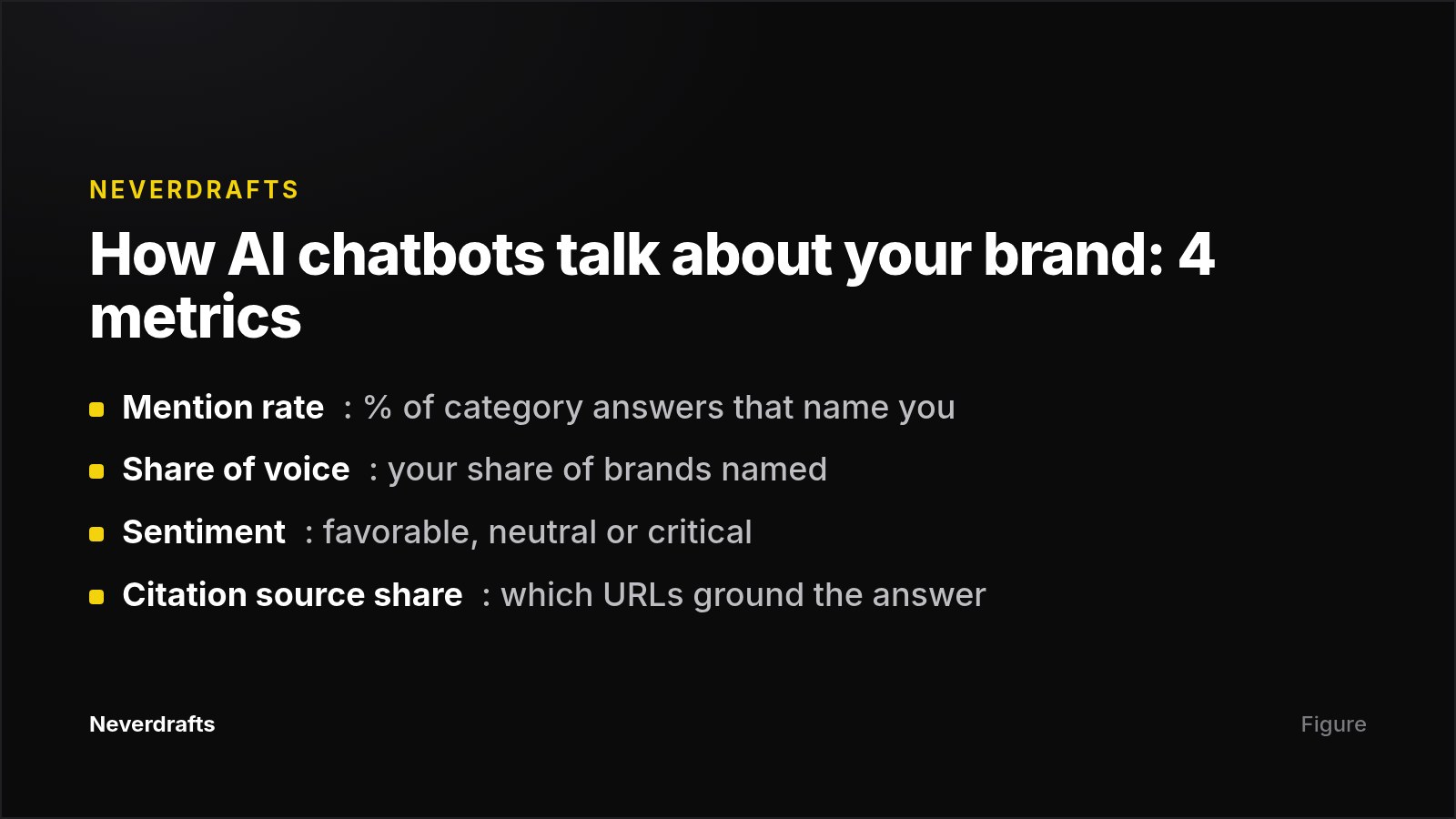
A useful monitoring tool answers four questions:
- Are we named? Mention rate across a fixed set of category prompts.
- How much of the conversation do we own? Share of voice when several brands appear in one answer.
- Is the framing favorable? Sentiment: positive, neutral or critical.
- Where does the AI get its information? Cited URLs, and whether any are yours.
Summary: AI brand monitoring tools compared
Prices are the smallest paid or free tier visible in the sources. MarketerHire warns this category re-prices roughly every quarter, so confirm before you buy.
| Tool | Best for | Standout feature | Engines (per sources) | Entry price |
|---|---|---|---|---|
| Trendos | Free, global baseline with history | Historical data from day one, daily runs | ChatGPT, Gemini, Claude, Perplexity, DeepSeek, Grok, Google AI Overviews | Free; Basic $39/mo |
| Otterly.AI | Mid-market teams of 5–20 | Simple weekly snapshots | ChatGPT, Perplexity, Google AI Overviews | ~$29/mo |
| Peec AI | Sentiment-heavy, PR-adjacent teams | Unlimited users | Three selected models | ~$89/mo |
| Neverdrafts | Teams that want monitoring plus fixes | Auto-generated remediation content | ChatGPT, Claude (Starter); Google AI Mode, Perplexity on higher tiers | Free audit; $99/mo |
| HubSpot AEO | HubSpot customers, ongoing tracking | CRM-informed prompt suggestions | ChatGPT, Gemini, Perplexity | Not stated |
| HubSpot AI Search Grader | Solo marketers, first audit | One-time free snapshot | ChatGPT | Free |
| Profound | Enterprise multi-engine programs | Up to nine engines on Enterprise | ChatGPT, Perplexity, Gemini, Copilot, Google AI Overviews | Quote, annual contract |
| Amplitude | Linking mentions to conversions | Accuracy checks plus behavior analytics | ChatGPT, Claude, Perplexity, Gemini | Free tier available |
| AthenaHQ | Brand teams running multi-LLM audits | Four-engine coverage incl. Claude | ChatGPT, Perplexity, Gemini, Claude | Quote |
| Semrush AI Toolkit | Existing Semrush customers | Bundled with SEO suite | ChatGPT, Google AI Overviews, Google AI Mode | Plans from ~$140/mo |
For a deeper engine-by-engine breakdown, see our AI brand monitoring tools engine coverage and price comparison.
Trendos: the free way to see how AI describes your brand
Trendos lets you type any brand into a search bar and see how ChatGPT, Gemini, Claude, Perplexity and Google AI Overviews mention, rank and describe it, with no sign-up or demo required.
Who it's for: In-house SEO teams, marketing teams and agencies auditing prospects.
Strengths: It tracks 7 engines, including DeepSeek and Grok, refreshing every prompt every 24 hours, on a dataset of 2M+ answers analysed, 400K+ cited sources and 120+ product industries. Brands already in the dataset carry historical data, so trends are visible from day one. Ad Radar spots competitor ads inside ChatGPT answers and shows each advertiser's impression share.
Limitations: The free tier caps you at 20 custom prompts and 600 answers per month, and Trendos Score is a proprietary metric that won't map onto other tools' numbers.
Pricing: The Free plan includes unlimited countries, up to 10 projects, 20 custom prompts and 600 answers per month. Paid plans are Basic at $39/month, Starter at $169/month and Pro at $379/month, lower with yearly billing.
Otterly.AI: the budget pick for weekly tracking
MarketerHire calls Otterly.AI the mid-market sweet spot: set up a list of prompts and get weekly snapshots of mentions, sentiment and competitor share.
Who it's for: In-house marketing teams of 5 to 20 people.
Strengths: Setup is simple and the entry price is low. Coverage of ChatGPT, Perplexity and Google AI Overviews is described as enough for most B2B and DTC programs through 2026.
Limitations: Gemini and Claude aren't in the listed coverage, and weekly snapshots can miss short-lived swings.
Pricing: Starts around $29/month on a monthly subscription.
Peec AI: for sentiment-focused programs
MarketerHire recommends Peec AI for sentiment-heavy programs and PR-adjacent teams — those more concerned with tone than raw mention counts.
Who it's for: Communications and brand teams with many stakeholders who need dashboard access.
Strengths: The Starter tier includes unlimited users, useful when PR, product marketing and leadership all want access.
Limitations: The entry tier covers three models you choose yourself, and pricing is tiered by prompt volume.
Pricing: MarketerHire lists the entry tier at about $89–95/month for 50 prompts across three selected models, tiered by prompt volume.
Neverdrafts: monitoring that ends in a fix
Disclosure: Neverdrafts is our product.
Neverdrafts tracks daily visibility across ChatGPT, Claude, Google AI Mode and Perplexity on real web interfaces rather than APIs, so you see what a user would actually see. It then generates and publishes content aimed at the prompts where competitors are named instead of you.
Who it's for: B2B SaaS companies, product teams and agencies that want to change what AI says about them, not only observe it.
Strengths: Each response gets a 0–100 score, weighted by where in the answer you appear. It surfaces the citing sources behind a competitor's mention, reports share of voice and sentiment, publishes one-click to WordPress, Webflow, Shopify, Framer and API, and tracks AI crawler visits as evidence new content is being picked up.
Limitations: Gemini, Copilot, DeepSeek and Grok aren't tracked. The Starter plan covers only ChatGPT and Claude; Google AI Mode, Perplexity, and competitor citation diagnosis start on the Growth tier. If you only want a monitoring dashboard, you'll pay for content generation you may not use.
Pricing: A free audit needs no card and returns results in about 30 seconds. Paid plans are Starter at $99/month (1 brand, 50 prompts, 30 articles), Growth at $199/month (3 brands, 150 prompts, 100 articles) and Agency at $399/month (10 brands, 500 prompts, 300 articles). All bill monthly with no contract.
HubSpot AEO and AI Search Grader: best if you already use HubSpot
HubSpot offers two things. The AI Search Grader is a free one-time audit covering ChatGPT only, suited to solo marketers running a first baseline. HubSpot AEO is the ongoing product, combining visibility, citation, competitor, sentiment and recommendation data across ChatGPT, Gemini and Perplexity.
Who it's for: Solo marketers taking a first look (Grader) and HubSpot customers who want monitoring inside their existing stack (AEO).
Strengths: Standalone AEO runs 25 prompts daily across ChatGPT, Gemini and Perplexity, with prompt suggestions drawing on company, competitor and industry context. In Marketing Hub Professional and Enterprise, suggestions can also use CRM data to surface the questions actual buyers ask.
Limitations: The Grader is a single snapshot, and HubSpot notes that reliable tracking requires repeated prompts across engines and time periods. Standalone AEO's 25 prompts is a small set for a multi-product brand, and Claude isn't in the listed coverage.
Pricing: The AI Search Grader is free. Standalone AEO pricing isn't stated in the sources.
Profound: enterprise-grade multi-engine coverage
Profound covers ChatGPT, Perplexity, Gemini, Copilot and Google AI Overviews in one dashboard, surfacing the URLs each engine cited plus competitor benchmarking.
Who it's for: MarketerHire points to brands with $50M+ in revenue and a dedicated AEO program, often running it alongside Botify or Conductor.
Strengths: Widest engine roster on its top plan. HubSpot reports Profound tracks ChatGPT on Starter, three engines on Growth and up to nine on Enterprise.
Limitations: Coverage depends heavily on tier, and pricing isn't published. MarketerHire says Profound "will outscope your needs and your budget" for earlier-stage teams.
Pricing: Quote-only on an annual contract, with a five-figure floor.
Amplitude: connect AI mentions to what visitors do next
Amplitude AI Visibility monitors ChatGPT, Claude, Perplexity and Google Gemini with accuracy verification, then ties AI-referred traffic to product and web analytics.
Who it's for: Teams that already measure product engagement and want to know whether AI-referred visitors activate and convert.
Strengths: It checks whether AI descriptions are correct, beyond counting mentions. Session Replay and heatmaps show how AI-referred visitors move through your site, and AI Agents surface anomalies in visibility data.
Limitations: Amplitude itself notes that teams wanting only mention tracking may prefer simpler point solutions, and its value grows with how much of its analytics suite you adopt.
Pricing: A free tier is available; paid pricing isn't stated in the sources.
AthenaHQ and Semrush: narrower fits worth knowing
AthenaHQ tracks ChatGPT, Perplexity, Gemini and Claude, one of the few tools in MarketerHire's set that includes Claude. It suits brand teams running audits across several LLMs, though pricing is quote-only and the sources give little detail on reporting features.
If you already pay for Semrush, its AI Toolkit is bundled into plans starting around $140/month and covers ChatGPT, Google AI Overviews and Google AI Mode, but misses Perplexity, Claude and Copilot, per Amplitude — confirm coverage before relying on it alone. Ahrefs Brand Radar plays a similar role for Ahrefs Enterprise customers.
How to choose a tool to monitor what AI says about your brand
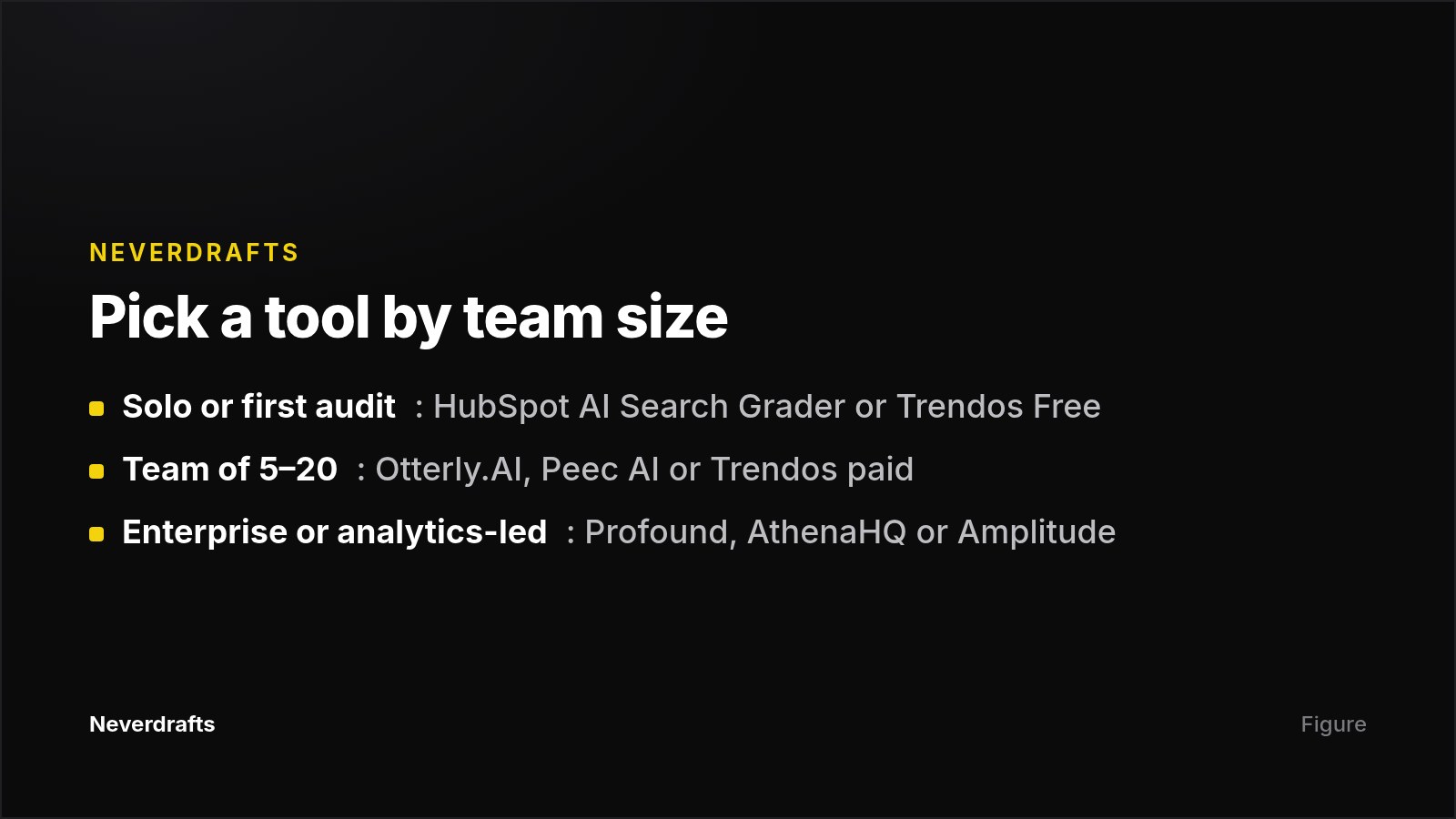
Choose by engine coverage at your tier, run frequency and citation detection first, then weigh accuracy, prompt management and what the tool does after it finds a gap. These criteria come from HubSpot's six evaluation factors and MarketerHire's five scoring criteria:
- Engine coverage at your tier. Check what the plan you'll actually buy includes, not the top tier. If buyers use Claude or Copilot, confirm those engines are tracked.
- Run frequency. Daily runs (Trendos, HubSpot AEO, Neverdrafts) catch volatility that weekly snapshots smooth over.
- Citation detection. MarketerHire calls surfacing the actual grounding URLs "the hardest part of AI search monitoring," and notes cheaper tools skip it.
- Accuracy and sentiment. If your worry is how you're described rather than whether you appear, favor tools that flag tone and factual errors. Talkwalker LLM Insights and Profound are both named for flagging inaccurate AI claims, though sources don't detail methodology.
- Prompt management. Look at how prompts are suggested and refreshed. Trendos offers a prompt wizard, and HubSpot can use CRM data.
- What happens next. Some tools report and stop; others add recommendations, content workflows or behavioral analytics.
A practical sequence is to run a free baseline first, then pick a paid tool once you know which prompts and engines matter. When you find gaps, a checklist like our nine steps to get your brand mentioned by ChatGPT turns the monitoring data into action.
Next step
Run the free Neverdrafts audit. It needs no card and returns results in about 30 seconds, giving you a baseline of where AI recommends competitors instead of you. Compare the results with a free Trendos report to see whether the gaps hold across engines, then decide whether you need monitoring alone or monitoring plus content fixes.
Frequently asked questions
Can I just ask ChatGPT about my brand myself?
You can, but it only tells you what one engine said at one moment. HubSpot notes that the same prompt can return different answers between runs, so reliable tracking requires repeating prompts across multiple engines and time periods and measuring the pattern. Monitoring tools automate that sampling, keep history, and benchmark competitors on the same prompts — something manual checks can't do consistently.
What's the difference between a mention and a citation?
A mention is when the AI names your brand with no link. A citation includes a clickable link to a source used to generate the answer. HubSpot explains that citations can drive direct visits to your site, while unlinked mentions still add to overall visibility. Good tools track both separately.
How much do AI brand monitoring tools cost?
Entry options are free: Trendos has a Free plan and HubSpot's AI Search Grader is a free one-time audit. Paid entry tiers in the sources include Otterly.AI at about $29/month, Trendos Basic at $39/month and Peec AI at about $89/month. Profound is quote-only with a five-figure annual floor. Prices change roughly quarterly, so confirm before buying.
Do these tools detect when AI says something false about my brand?
Some do, but it isn't standard. Amplitude markets accuracy verification as a core feature and warns that AI can attribute features to brands that don't exist. Talkwalker LLM Insights and Profound are also named in sources as checking for inaccurate or misleading AI claims. Most tools focus on mentions, sentiment and citations instead, so if misinformation is your main risk, ask vendors directly how they flag factual errors before you commit.
Which AI engines should I monitor?
Start with the engines your buyers use. Most tools cover ChatGPT, and many add Perplexity, Gemini and Google AI Overviews. Coverage of Claude, Copilot, DeepSeek and Grok is less consistent. Trendos tracks seven engines, and Profound's Enterprise tier supports up to nine. Check what your specific plan includes, since coverage often expands only on higher tiers.